
IT International Academy - Computer Studies
IT International Academy
💻 Empowering Future Tech Professionals

Computer Studies Program

Learning the Life of a Computer — From Zero to Confident User
🖥️ MODULE 2.0

Computer Hardware Basics

Open computer case showing internal hardware

In Module 1, you learned to command a computer confidently through its keyboard, mouse, and power controls. Now it's time to open the hood — literally, in some of the practical tasks ahead — and understand what's actually happening inside the machine you've been using.

This module exists because of a simple truth this Academy holds firmly: someone cannot claim to truly know computers if they've never looked inside one. You don't need to become a repair technician. But you do need to recognize the core components, understand what each one does, and be comfortable enough to handle basic hands-on tasks — like installing RAM — without fear.

By the end of this module, you will be able to identify every major hardware component by sight, understand what specs actually mean when buying or evaluating a computer, connect external devices confidently, and set up a brand new computer from the very first boot.

🖥️ SECTION 2.1

Identifying Hardware Components

Computer motherboard and components

Every computer, no matter its brand or price, is built from the same core family of components working together. Learning to recognize each one by sight is the first real step toward technical confidence — the moment you stop seeing a computer as a mysterious sealed box, and start seeing it as a system of understandable parts.

This section walks through each major component, what it physically looks like, and — more importantly — what job it actually does inside the machine.

2.1.1 — The Motherboard: The Computer's Nervous System

Close up of a computer motherboard

If you open a desktop computer's case, the large flat circuit board that everything else connects into is the motherboard. Think of it as the computer's central nervous system — every other component, from the processor to the memory to the storage drive, plugs directly into it, and it's responsible for letting all of them communicate with each other.

Without a motherboard, you don't have a computer — you have a pile of expensive, disconnected parts. Every port on the outside of a computer case (USB, HDMI, audio) traces back to a physical connection on this one board.

2.1.2 — The CPU: The Brain of the Computer

Computer processor CPU chip

The Central Processing Unit (CPU) is small — often no bigger than a matchbox — but it is, unmistakably, the brain of the entire machine. Every calculation, every decision, every instruction your computer carries out passes through this single chip, executed at a speed measured in billions of operations per second.

When people say a computer is "fast" or "slow," they are very often talking about the CPU — its ability to process instructions quickly is one of the single biggest factors in how responsive a computer feels during everyday use.

2.1.3 — RAM: Short-Term Memory

RAM memory stick

Random Access Memory (RAM) is the computer's short-term memory — a fast, temporary workspace used to hold whatever the computer is actively working on right now. Open five browser tabs, a document, and a music app simultaneously, and all of them are being held in RAM at that exact moment.

The catch: RAM is temporary. Turn the computer off, and everything stored in RAM disappears completely — which is exactly why saving your work to permanent storage matters so much, a concept you'll explore more in Module 1's shutdown lessons. The more RAM a computer has, the more tasks it can juggle smoothly at once without slowing down.

2.1.4 — Storage Devices: Long-Term Memory

Hard drive and SSD storage devices

Unlike RAM, storage devices keep your data permanently — even when the computer is switched off. This is where your operating system, your programs, your photos, and your documents actually live long-term.

There are two main types you'll encounter: the older Hard Disk Drive (HDD), which stores data on spinning magnetic disks, and the newer Solid State Drive (SSD), which uses flash memory chips with no moving parts at all. SSDs are significantly faster, quieter, and more durable — which is why nearly every modern computer, from budget laptops to high-end workstations, now ships with one as standard.

💡 Practical Task: If a spare computer case is available in your lab, have your instructor open it safely and point out the motherboard, CPU, RAM sticks, and storage drive in person. Touch nothing without guidance — but look closely, and try to identify each part before your instructor names it.

🖥️ SECTION 2.2

Input & Output Devices — How You Talk to a Computer

Keyboard, mouse, monitor and other peripherals arranged together

Every piece of hardware inside the case matters, but none of it means anything without a way for you to actually communicate with it. Input and output devices are the bridge between you and the machine — and while you've already met the keyboard and mouse in Module 1, this section widens that picture to every device that carries information in and out of a computer.

Understanding this input/output relationship deeply means that when something isn't working — no sound, no display, a device not responding — you'll instinctively know whether you're dealing with an input problem or an output problem, and troubleshoot accordingly rather than guessing blindly.

2.2.1 — Input Devices Beyond the Keyboard and Mouse

Scanner and webcam input devices

An input device is anything that sends information into the computer. Beyond the keyboard and mouse, you'll regularly encounter several others in everyday and professional settings.

A scanner converts a physical document or photo into a digital file the computer can store and edit. A webcam captures live video, essential for video calls and online meetings. A microphone captures audio — for calls, voice notes, or voice commands. A graphics tablet lets designers draw directly onto the computer using a pen-like stylus, translating hand movement into digital lines.

Each of these expands what "talking to a computer" can mean — moving beyond typing and clicking into voice, image, and handwriting, all of which the computer processes through that same Input → Process → Output cycle you learned in Module 1.

2.2.2 — Output Devices: The Monitor

Computer monitor displaying a desktop

The monitor is the most obvious output device — it's how a computer visually shows you results. But there's more to understand about it than simply "the screen."

Monitors are measured by resolution — the number of pixels (tiny dots of light) that make up the image, commonly written as width × height, such as 1920×1080. Higher resolution means sharper, more detailed images. Refresh rate, measured in Hertz (Hz), describes how many times per second the image updates — a higher refresh rate creates smoother motion, especially noticeable when scrolling quickly or watching fast video.

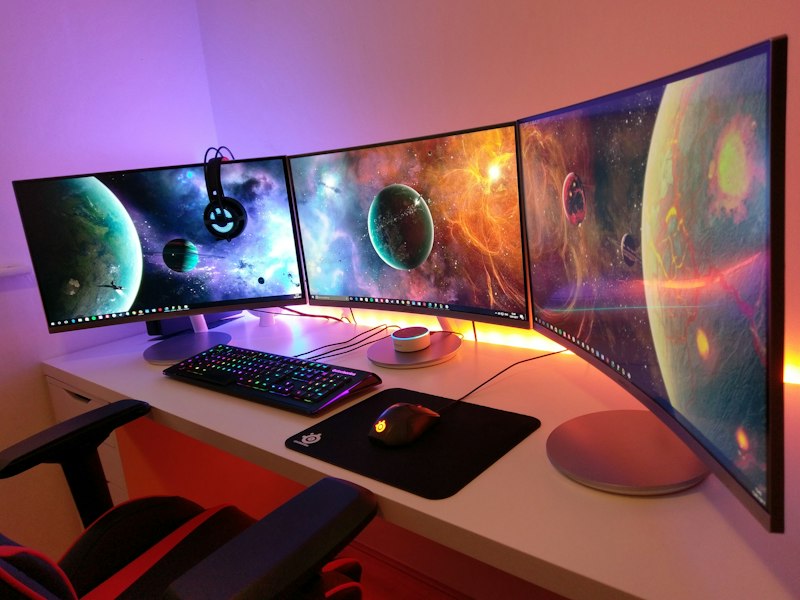
Connecting a monitor is typically done through an HDMI cable (most common today), though older or specialized setups may use DisplayPort or VGA. Multiple monitors can even be connected to a single computer, extending your workspace across two or more screens at once — a setup increasingly common in both offices and home workstations.

2.2.3 — Output Devices: Printers and Speakers

Printer producing a document

A printer turns digital documents into physical, paper copies — still essential in offices, schools, and homes despite how digital the world has become. Printers generally fall into two main types: inkjet printers, which spray tiny drops of liquid ink onto paper and are great for photos and color work, and laser printers, which use toner powder and heat, and are typically faster and more cost-effective for high-volume, mostly text-based printing.

Speakers, meanwhile, convert digital audio signals into sound you can actually hear — whether built directly into a laptop, or connected externally through a cable or Bluetooth for richer sound quality. Every notification sound, every song, every voice in a video call reaches your ears through this exact process.

2.2.4 — Ports: Where Everything Physically Connects

Computer ports on the side of a laptop

Every input and output device needs somewhere to physically plug in, and those connection points are called ports. Recognizing them by sight means you'll never again stand confused, cable in hand, wondering where it's supposed to go.

USB-A is the classic rectangular port, found on almost every computer, used for flash drives, mice, and keyboards. USB-C is the newer, smaller, oval-shaped connector that's reversible — it plugs in either way up — and is quickly becoming the universal standard for charging and data transfer alike. HDMI carries both video and audio to an external monitor or TV. Ethernet ports (recognizable by their wider, telephone-jack-like shape) connect a computer directly to a wired internet network. And the 3.5mm audio jack is the small round port for wired headphones.

Learning these shapes by sight is exactly the kind of small, practical knowledge that instantly makes someone look — and feel — technically capable.

2.2.5 — Ports & Connections at a Glance

Port Shape Common Use
USB-A Rectangular Flash drives, mouse, keyboard
USB-C Small oval, reversible Charging, data transfer
HDMI Wide trapezoid Monitor / TV video & audio
Ethernet Wide clip-in jack Wired internet connection
3.5mm Jack Small round hole Wired headphones/speakers

💡 Practical Task: Examine your assigned computer (or laptop) closely. Identify and name every port you can find along its edges. For each one, state out loud what device would typically connect to it. If you have a phone charger or flash drive nearby, test which ports they actually fit into.

🖥️ SECTION 2.3

Connecting Peripherals — Hands-On Confidence

Cables and peripherals being connected to a computer

Knowing the names of ports and devices is one thing. Actually connecting them confidently, on your own, without hesitation — that's the real skill this Academy cares about. This section takes everything you learned in 2.2 and puts it into your hands, walking through the exact steps for connecting the devices you'll use most often in real life.

Every step here is something you should physically practice, not just read. Reading about connecting a Bluetooth device and actually doing it for the first time are two very different experiences — and this course is built on the second one.

2.3.1 — Pairing a Bluetooth Device Step by Step

Wireless headphones being paired with a laptop

Bluetooth lets two devices talk to each other wirelessly over a short distance, and once you've paired a device correctly the first time, it usually reconnects automatically every time after. Here is the exact process, step by step:

First, open Settings → Bluetooth & Devices on Windows, or System Settings → Bluetooth on Mac, and switch Bluetooth on. Second, put the external device into pairing mode — usually by holding its power or Bluetooth button until a light starts blinking; this step varies by brand, so a quick glance at the device's manual helps the first time. Third, on the computer, select "Add Device" and wait for the device's name to appear in the list. Fourth, click it and confirm "Pair" — some devices ask you to confirm a matching code shown on both screens.

Once paired successfully, that device will usually reconnect on its own the next time both are powered on and nearby — no need to repeat the whole process again.

2.3.2 — Setting Up a Printer From Scratch

Setting up a new printer

Printers can connect either through a direct USB cable, or wirelessly over your Wi-Fi network — and most modern printers support both. Here's the full setup process, whichever route you choose:

Begin by unboxing the printer, installing its ink or toner cartridges, and loading paper as shown in its manual. Next, decide your connection method — for USB, simply connect the cable between printer and computer; for Wi-Fi, use the printer's own screen or buttons to join it to your wireless network. Then, install the correct driver — the small piece of software that lets your operating system "speak" to that exact printer model. Windows and Mac often detect and install this automatically, but if not, it can be downloaded directly from the manufacturer's website.

Finally, confirm it appears under Settings → Printers & Scanners, set it as your default if it's your main printer, and always print a test page before relying on it for anything important — this single habit catches most setup issues immediately, rather than in the middle of a real task.

2.3.3 — Working With External Drives Safely

External hard drive connected to a laptop

External hard drives, SSDs, and USB flash drives let you carry data between computers or simply expand your available storage. Using them correctly is simple, but one step is critical and often skipped by beginners.

Plug the device into any available USB port — most operating systems detect it automatically within seconds, and it will appear as a new drive in File Explorer (Windows) or Finder (Mac). From there, you can open it exactly like any folder, copying files to and from it freely.

Before physically unplugging it, always use "Safely Remove Hardware" (Windows) or "Eject" (Mac) first. This tells the computer to finish writing any remaining data and properly close the connection. Skipping this step is one of the most common causes of corrupted files and lost data among beginners — a completely preventable mistake once you build the habit of ejecting properly, every single time.

2.3.4 — Connecting to an External Monitor or Projector

Laptop connected to an external monitor

Connecting a laptop to a bigger screen — whether for presentations, extra workspace, or watching something comfortably — is a surprisingly common task that trips up many beginners in the moment. It shouldn't, once you know the steps.

Connect an HDMI cable between the laptop and the external display, then power the display on and select the correct input source if it doesn't switch automatically. On the laptop, most operating systems offer a quick shortcut — often Windows Key + P on Windows — to choose how the second screen behaves: Duplicate (both screens show the same thing, ideal for presentations), Extend (the second screen becomes additional workspace), or Second screen only (the laptop's own screen turns off).

Knowing this one shortcut can save you from the very public, very stressful experience of fumbling with display settings in front of a room full of people during a presentation.

2.3.5 — Troubleshooting Common Connection Problems

Bluetooth device won't show up: confirm it's actually in pairing mode, not just powered on — these are often different states entirely. Printer shows "offline": restart both the printer and computer, or remove and re-add the printer in settings. USB drive not recognized: unplug, wait ten seconds, and try a different port before assuming the drive itself has failed. External monitor shows nothing: confirm the correct input source is selected on the display itself, and try pressing the Duplicate/Extend shortcut again — sometimes the signal simply needs a nudge to be detected.

In almost every one of these situations, the fix is one of three things: check the connection, restart the device, or reselect the correct setting. Internalizing that pattern will solve the overwhelming majority of connection issues you'll ever encounter.

💡 Practical Task: Complete all three hands-on tasks with your assigned equipment: pair a Bluetooth device from scratch, insert and safely eject a USB flash drive, and — if available — connect your laptop to an external monitor or projector and switch between Duplicate and Extend modes. Do each one without asking for help first — only ask if you get genuinely stuck after trying.

🖥️ SECTION 2.4

Understanding Specs — Buying or Evaluating a Computer With Confidence

Person comparing computer specifications while shopping

Picture this: you walk into a shop to buy a laptop, and the sales assistant rattles off a list of numbers — "16GB RAM, 512GB SSD, Intel Core i5" — and you nod along, having no real idea what any of it means or whether it's actually good value for your money. That moment of quiet confusion is exactly what this section eliminates, permanently.

Understanding specs isn't about becoming a hardware engineer. It's about walking into that same conversation and knowing, immediately, whether what you're being offered actually fits what you need — and whether the price being asked is fair for it.

2.4.1 — Understanding the Processor (CPU) Spec

Computer processor specification label

When you see a processor listed as "Intel Core i5, 12th Generation" or "AMD Ryzen 5, 7000 series," here's what actually matters in those names. The number (i3, i5, i7, i9 for Intel; 3, 5, 7, 9 for AMD) roughly indicates performance tier — higher numbers generally mean more processing power, more capability for demanding tasks, and a higher price tag.

The "generation" number tells you how recent the chip's design is — newer generations are typically more efficient and powerful even at the same tier number. For most everyday computer studies work — browsing, documents, spreadsheets, video calls — an i3 or Ryzen 3 is often genuinely sufficient. An i5 or Ryzen 5 comfortably handles more demanding multitasking. i7/i9 or Ryzen 7/9 chips are built for heavy work like video editing or serious multitasking under pressure — often unnecessary expense for a beginner's first computer.

2.4.2 — Understanding RAM: How Much Do You Actually Need?

RAM specification comparison

You already know RAM is the computer's short-term memory — the workspace for whatever it's actively juggling. Here's how that translates into a real buying decision:

4GB is now considered the bare minimum, and honestly, often frustratingly limiting — expect slowdowns the moment you open more than a couple of browser tabs alongside another program. 8GB is a comfortable, solid baseline for everyday computer studies use — browsing, documents, spreadsheets, video calls, all running smoothly together. 16GB gives real breathing room for heavier multitasking — dozens of browser tabs, multiple programs open at once, light photo or video editing. 32GB or more is generally reserved for professional creative work or serious multitasking under heavy load — well beyond what this course requires.

For most students in this program, 8GB is the realistic sweet spot — enough to work comfortably without unnecessary extra cost.

2.4.3 — Understanding Storage: HDD vs. SSD, and How Much Space

SSD and HDD storage comparison

Storage specs list two things: the type (HDD or SSD) and the capacity (measured in GB or TB). Always prioritize an SSD over an HDD if you have the choice — the speed difference is dramatic, affecting everything from how fast the computer boots up to how quickly programs open.

For capacity: 128GB is workable but tight, especially once an operating system and a handful of programs are installed. 256GB is a comfortable, realistic baseline for most students. 512GB or 1TB (1,000GB) gives generous room for photos, documents, and downloaded files without needing to constantly manage space. Remember: you can always add external storage later (as covered in Section 2.3), so don't feel pressured to overspend upfront on built-in storage alone.

2.4.4 — Battery Life, Build Quality, and Other Practical Factors

Laptop battery and build quality check

Specs sheets rarely shout about these next factors, but they matter just as much day-to-day as raw processing power. Battery life, listed in hours, tells you how long a laptop can run unplugged — critical if you'll be studying or working away from a power outlet frequently. Anything advertising 8+ hours of real-world use is a solid, dependable choice for a student.

Build quality — whether the laptop feels solid or flimsy, whether the hinge feels sturdy — genuinely affects how long a device survives daily use, bag transport, and the occasional accidental bump. And screen quality matters more than many buyers expect: a dim or washed-out display makes hours of daily use noticeably more tiring on the eyes.

2.4.5 — Recommended Specs by Use Case

Use Case RAM Storage Processor
Basic Student Use 8GB 256GB SSD Core i3 / Ryzen 3
Office & Multitasking 8–16GB 512GB SSD Core i5 / Ryzen 5
Creative / Heavy Work 16–32GB 1TB SSD Core i7 / Ryzen 7

💡 Practical Task: Search online for a laptop currently for sale in your area. Write down its full spec sheet — processor, RAM, storage type and size, battery life. Using everything from this section, decide for yourself whether it's good value, and explain why, as if advising a friend on whether to buy it.

🖥️ SECTION 2.5

Hands-On: Opening a Case Safely & Installing RAM

Open desktop computer case showing internal components

This is the moment this module has been building toward — the point where theory becomes action. You are about to open a real computer case and physically handle its components. For many students, this single practical is the moment computer studies stops feeling abstract and starts feeling real.

Let's be clear about the goal here: this is not a repair technician's course, and you are not expected to become one. But someone who has genuinely studied how to use a computer should never feel intimidated by the inside of one. Opening a case, safely installing a stick of RAM, and closing it back up again — this is the exact skill that separates true computer confidence from surface-level familiarity.

2.5.1 — Safety First: Before You Touch Anything

Person taking safety precautions before opening a computer

Every single time you open a computer case, follow this safety sequence without skipping a single step. This isn't about being overly cautious — it protects both you and the delicate components inside.

First, shut the computer down completely using the proper shutdown process from Module 1 — never open a case while it's running or even in sleep mode. Second, unplug it from the power outlet entirely — not just switching it off at the wall, but physically removing the cable. Third, ground yourself by touching a metal, unpainted part of the case before touching anything inside — this discharges any static electricity built up in your body, which can otherwise silently damage sensitive components.

If an anti-static wrist strap is available, use it. If not, grounding yourself by touching the case, and avoiding thick carpets or synthetic clothing that build up static, is a reasonable substitute for a training environment.

2.5.2 — Opening the Case

Removing the side panel of a computer case

Most desktop cases open by removing a side panel, usually held in place by one or two thumb screws or regular screws at the back edge of the case. Loosen these screws fully, then gently slide or swing the panel open — it should never require force. If it feels stuck, double check for a screw you may have missed rather than pulling harder.

Once open, pause before touching anything. Take a moment to visually locate the motherboard, the CPU (usually under a fan or cooler), the RAM slots (long thin slots, usually near the CPU), and the storage drive. This is the same layout you studied in Section 2.1 — now seen in person, in three dimensions.

2.5.3 — Removing a RAM Stick

Removing a RAM stick from its slot

RAM sticks sit in long, narrow slots on the motherboard, held in place by small plastic clips at each end. To remove one, gently push both clips outward simultaneously — this releases the stick, and it will pop up slightly on its own. Once released, hold it gently by its edges (never touching the gold connector pins along the bottom) and lift it straight out.

Notice the small notch along the bottom edge of the stick — this is a deliberate design feature that only allows the RAM to be inserted one specific way, making it physically impossible to install it backward by accident.

2.5.4 — Installing a RAM Stick

Installing a new RAM stick into a motherboard slot

With the slot's plastic clips pushed outward and open, align the notch on the RAM stick with the matching notch in the slot — this confirms it's facing the correct direction. Position the stick directly above the slot, then press down firmly and evenly along both ends at the same time.

You should feel — and often hear — a distinct click as the plastic clips snap back into place, locking the stick securely in the slot. If it doesn't click into place easily, do not force it — remove it, double-check the notch alignment, and try again. A correctly seated RAM stick sits perfectly flat and even, with both clips fully closed against its sides.

2.5.5 — Closing Up and Testing

Closing a computer case after installing components

Once the RAM is securely seated, slide the side panel back into place and re-tighten the screws you removed earlier. Reconnect the power cable, and power the computer on as usual.

A successful installation means the computer boots normally, exactly as before. To confirm the new RAM is actually recognized, open the System Information panel (search "System Information" on Windows, or "About This Mac" on macOS) and check the listed memory amount matches what you expect. This final confirmation step is what turns a hands-on task into a genuinely verified skill — not just something you did, but something you can prove worked.

2.5.6 — Troubleshooting: Computer Won't Boot After RAM Installation

Don't panic — this is common and almost always simple to fix. If the computer doesn't boot, or you hear repeated beeping sounds, power off, unplug, and re-open the case. Most often, the RAM stick isn't fully seated — remove it and reinsert it, pressing firmly and evenly until both clips click shut completely.

If it still won't boot, try the RAM stick in a different slot, and double-check that the notch alignment is correct. In rare cases, a RAM stick may simply be incompatible with that particular motherboard — this is why checking compatibility before purchasing new RAM is always recommended, a skill you'll build further as you grow more comfortable with hardware.

💡 Practical Task: Under instructor supervision, using a lab computer designated for hands-on practice, complete the full cycle: safely shut down and unplug the computer, open the case, remove an existing RAM stick, reinsert it correctly, close the case, and boot the computer back up. Confirm the RAM is recognized using System Information before considering the task complete.

🖥️ SECTION 2.6

Setting Up a Brand-New Computer for the First Time

Unboxing and setting up a new laptop

There's a particular kind of moment — unboxing a brand-new computer, screen still covered in protective film, powering it on for the very first time — that can feel exciting and slightly overwhelming all at once. This section makes sure that moment is nothing but exciting.

Every new computer walks you through an initial setup process the very first time it's powered on, before you ever reach a usable desktop. Understanding what each step actually means — rather than clicking through blindly — means you set your device up correctly from day one, avoiding headaches later.

2.6.1 — Language, Region, and Keyboard Settings

Initial setup screen on a new computer

The very first screen you'll see asks you to choose your language, country/region, and keyboard layout. These aren't just cosmetic choices — they quietly shape how the entire system behaves going forward: your region affects date formats, currency symbols, and default app suggestions, while your keyboard layout determines exactly which character appears when you press each key.

Take a moment to choose these correctly rather than rushing through them. Selecting the wrong keyboard layout, for example, can cause certain symbols and punctuation to appear in unexpected places later — a confusing problem to diagnose after the fact if you don't remember making that choice during setup.

2.6.2 — Connecting to Wi-Fi During Setup

Connecting a new computer to Wi-Fi during setup

Early in setup, you'll be asked to connect to a Wi-Fi network. This step matters more than it might seem — many of the following setup steps, like account creation and software updates, actually require an internet connection to complete.

Select your network name from the list, enter its password carefully (passwords are case-sensitive, so pay close attention to capital letters), and wait for the connection to confirm before continuing. If no Wi-Fi is available, most systems allow you to skip this step temporarily and connect later — though certain features will remain unavailable until you do.

2.6.3 — Creating or Signing Into Your Account

Creating an account during computer setup

Modern operating systems tie your computer to an online account — a Microsoft account on Windows, or an Apple ID on Mac. This single account is what allows your settings, files, and purchased apps to sync across multiple devices, and what allows you to recover your computer if you ever forget your password.

Use a real, active email address you check regularly when creating this account — it becomes your recovery method if you're ever locked out. Choose a strong, memorable password, and if offered, set up two-factor authentication immediately, adding a critical extra layer of security covered in more depth later in this program.

2.6.4 — Privacy Settings and Optional Features

Privacy settings screen during setup

Partway through setup, you'll be presented with a series of privacy-related toggles — location services, diagnostic data sharing, personalized advertising, and similar options. Don't just click "Accept All" without reading — take the extra thirty seconds to review each toggle and decide deliberately what you're comfortable sharing.

A reasonable default for most beginners: keep location services on if you plan to use maps or location-aware apps, but feel free to turn off optional data-sharing and personalized advertising toggles unless you have a specific reason to want them on. Nothing here is permanent — every one of these settings can be revisited and changed later in the system settings menu.

2.6.5 — First Actions Once You Reach the Desktop

New computer desktop ready for first use

Reaching the desktop for the first time feels like the finish line — but a few final actions now will save you real trouble later. First, run a full system update immediately; brand-new computers often ship with software that's already slightly out of date by the time they reach you.

Second, install a trusted antivirus solution if one isn't already built in and active — Windows includes Windows Defender by default, which is genuinely sufficient for most users, but confirm it's switched on. Third, remove any unwanted pre-installed trial software ("bloatware") that came bundled with the machine, freeing up storage space and reducing clutter. Only after these three steps should you consider the new computer truly ready for daily use.

2.6.6 — New Computer Setup Checklist

Step Why It Matters
Choose language & keyboard layout Affects formats and typed characters system-wide
Connect to Wi-Fi Required for account setup & updates
Create/sign into account Enables sync, recovery, and app access
Review privacy settings Controls what data is shared, by default
Run system updates Closes security gaps, fixes early bugs
Confirm antivirus is active Protects against malware from day one

💡 Practical Task: If a new or freshly-reset computer is available in your lab, walk through the entire setup process from the very first screen to a fully updated desktop. If not, write out the full checklist above from memory, in the correct order, explaining in your own words why each step matters.

🖥️ SECTION 2.7

Why Hardware Knowledge Matters — Careers, Confidence & What's Next

Technician confidently working with computer hardware

You've now identified the core components inside a computer, understood the specs that actually matter when buying one, connected peripherals with confidence, and physically installed RAM with your own hands. It's worth pausing to ask: where does all of this actually take you?

This is not knowledge that sits quietly in a textbook. It shows up the moment your laptop starts running slow and you can diagnose whether it needs more RAM. It shows up when a friend or colleague's computer won't turn on, and you're the calm person in the room who knows exactly what to check. It shows up in job interviews, in your own small business, and in the quiet, private confidence of never again being intimidated by the inside of a machine.

2.7.1 — IT Support & Help Desk Roles

IT support technician helping a colleague

Entry-level IT support and help desk roles are, in many organizations, the very first door into a career in technology — and their daily responsibilities line up almost exactly with what you've learned in this module. Connecting peripherals, understanding specs, troubleshooting basic hardware issues — these are not advanced skills in that world; they are the baseline expectation for day one.

Many people underestimate how far this single module can take them in a job interview for exactly this kind of role — being able to speak confidently and accurately about RAM, storage, and basic troubleshooting steps sets a candidate apart immediately from someone who has only ever used a computer passively.

2.7.2 — Equipment Setup & Office Technology Coordination

Office technology setup coordinator

Every office, school, and organization needs someone comfortable setting up new computers, connecting printers, and troubleshooting basic hardware hiccups — often without any formal "IT" title at all. This is frequently the quiet, unofficial role that the most computer-confident person in any workplace ends up filling, simply because they're the one who isn't afraid to try.

That confidence has real value — it often translates into being trusted with more responsibility, more visibility, and more opportunity, even in roles that have nothing to do with technology on paper.

2.7.3 — Bridging Into Module 3 and Beyond

Student progressing to the next stage of learning

Everything ahead in this program — operating systems, file management, the internet, productivity software — runs on top of the physical machine you now understand. Module 3 will take you inside the software that brings this hardware to life — Windows, macOS, and Linux — and you'll approach it with a real advantage: knowing exactly what physical components that software is actually controlling underneath the surface.

That's the real gift of this module — not just hardware trivia, but a mental model of computers that will make every future module click into place faster and more intuitively.

💡 Practical Task: Write a short paragraph, in your own words, explaining to someone who has never taken this course why understanding basic computer hardware matters — even for someone who will never work "in IT." Use at least three specific examples from this module.

🖥️ SECTION 2.8

File Types, Cloud Storage & Backup Fundamentals

Cloud storage and file backup concept

You've already learned what storage hardware physically looks like — HDDs and SSDs sitting inside the case. Now it's time to understand what actually lives on that storage — the files themselves, the formats they come in, and the smarter, safer ways to keep them protected beyond just your computer's internal drive.

This is where hardware knowledge turns into real-world data protection habits — the kind that save people from devastating, avoidable loss when a device fails, is lost, or is stolen.

2.8.1 — Understanding File Types and Extensions

Different file type icons

Every file carries a short code after its name, called a file extension — the letters following the final dot, like .docx, .jpg, or .mp4. This tiny detail tells your operating system exactly what kind of file it is and which program should open it by default.

Documents commonly use .docx (Word), .pdf (Portable Document Format, widely used for sharing finished, non-editable documents), or .txt (plain text). Images commonly use .jpg or .png — .png supports transparency, making it popular for logos and graphics, while .jpg is typically smaller in size, making it common for photos. Video and audio commonly use .mp4 and .mp3 respectively — near-universal formats playable on almost any device.

Recognizing these extensions at a glance means you'll instantly know what a file is and roughly how to handle it, even before opening it — a small skill that removes a surprising amount of daily confusion.

2.8.2 — Cloud Storage: Google Drive, OneDrive, and Dropbox

Cloud storage services on a laptop screen

Cloud storage means saving your files on remote servers accessible over the internet, rather than only on your own device's physical drive. Google Drive, Microsoft OneDrive, and Dropbox are the three most widely used services, each offering a free storage allowance to start with.

The real power here is accessibility and protection combined — a file saved to the cloud is reachable from your phone, your laptop, or any browser anywhere in the world, and it survives even if your physical device is lost, stolen, or damaged. Setting up cloud storage is simple: create a free account with your chosen provider, install its app or use it directly through a browser, and drag files into it exactly as you would any folder.

2.8.3 — Why Backing Up Data Isn't Optional

Backing up data to external storage

Here's an uncomfortable truth this Academy wants you to hear early: every storage device eventually fails. Hard drives wear out. SSDs have a finite lifespan. Laptops get lost, stolen, or damaged. The difference between a minor inconvenience and a genuine catastrophe is almost always whether that data was backed up somewhere else.

The gold-standard approach, used by professionals worldwide, is called the 3-2-1 rule: keep at least three copies of important data, on two different types of storage media, with one copy stored somewhere off-site (like cloud storage). For most students, a simpler version works well — one copy on your main device, one copy on an external drive, and one copy in the cloud.

2.8.4 — Automatic Backup Tools Built Into Your Operating System

Automatic backup settings on a computer

You don't need to manually remember to back up your files every week — both Windows and macOS include free, built-in tools that do this automatically once set up correctly.

Windows offers File History, found under Settings → Update & Security → Backup, which automatically saves copies of your files to an external drive on a schedule you choose. macOS offers Time Machine, found under System Settings, which does the same, creating a complete, restorable snapshot of your system over time.

Setting one of these up takes only a few minutes, and from that point forward, backup happens quietly in the background — exactly the kind of "set it and forget it" habit that protects you long before you'd ever think to worry about it.

2.8.5 — Freeing Up Storage Space: Disk Cleanup

Disk cleanup freeing storage space

Over time, storage drives quietly fill up with temporary files, old downloads, and cached data most people never think to clear out. Both Windows and macOS include built-in tools to reclaim this space without needing any third-party software.

On Windows, search for "Disk Cleanup" or use Settings → System → Storage, which shows exactly what's taking up space and lets you clear temporary files with a single click. On Mac, go to About This Mac → Storage → Manage, which offers similar recommendations, including identifying large files you may have forgotten about entirely.

Running this every few months — combined with regularly emptying your Recycle Bin/Trash — keeps a computer running smoothly and prevents the frustrating slowdown that comes with a nearly-full storage drive.

💡 Practical Task: Create a free cloud storage account (Google Drive, OneDrive, or Dropbox) if you don't already have one, and upload one real file to it. Then locate and run your operating system's built-in disk cleanup tool, noting how much space it identifies as reclaimable.

🏆
Module 2 Complete
Computer Hardware Basics

You now understand what's inside a computer, how to evaluate specs, how to connect peripherals, and how to physically handle hardware with confidence. Onward to Module 3: Operating Systems.